
Every first-time author guide out there will tell you that the hardest part of writing a book is not the writing itself. It is knowing where to start, what to prioritize, and how to move from a raw idea to a finished, publishable manuscript without getting lost along the way. If you have been sitting on a book concept for months or even years, this guide is built to get you unstuck and moving forward.
We have helped hundreds of first-time authors navigate the journey from idea to published book. The pattern we see over and over is that success does not come from talent alone. It comes from following a clear process, making smart decisions at each stage, and knowing when to bring in professional support. That is exactly what this guide delivers.
Inside This First-Time Author Guide
Here is a quick overview of what this blog covers, so you know exactly what to expect.
- How to develop your book concept and build a working outline
- The mindset and method behind writing your first book without burning out
- Why revision is where good manuscripts become great books
- How to select between traditional publishing and self-publishing
- A practical first-time author checklist to keep you on track from start to finish
Developing Your Idea and Building an Outline
The biggest mistake we often see is jumping straight into writing without any first-time author guide. Enthusiasm is great, but it fades fast when you hit chapter five and realize you have no idea where the story is going. A solid outline prevents that problem entirely.
Validate Your Concept First
Before you invest months of your life into a manuscript, take a step back and evaluate whether your idea has legs. Ask yourself these questions.
- Is there a clear audience for this book? Identify who would actually buy it and why.
- What genre does it belong to? Understanding genre expectations helps you write something readers will recognize and enjoy.
- What makes it different? Browse bestseller lists and read reviews of comparable titles. Find the gap your book fills.
This validation step might feel unnecessary when you are excited about an idea, but it saves enormous amounts of time and energy down the road. Every reliable first-time author guide emphasizes this point because skipping it is one of the top reasons manuscripts never reach publication.
Create a Logline and Synopsis
A logline is a one or two-sentence summary of your book that captures the core concept. If you cannot describe your book in two sentences, the idea might need more refinement. After the logline, expand it into a full synopsis that covers your plot arc, character journeys, or core arguments from beginning to end.
Build a Chapter Outline
Break your book into chapters and map out the key beats within each one. For fiction, this means plotting the beginning, middle, and end with clear turning points. For nonfiction, it means organizing your ideas into a logical progression that builds understanding chapter by chapter.
Besides, authors working in younger reader categories will find that children’s book writing tips cover pacing, engagement, and age-appropriate structure in ways that make the outlining process far more intentional from day one.
Drafting Your Manuscript With Consistency
Writing your first book is as much about discipline as it is about creativity. The authors who finish are not necessarily the most talented writers. They are the ones who show up consistently and keep putting words on the page even when it feels difficult.
Set Realistic Milestones
Break your total word count goal into manageable daily or weekly targets. If your book is 60,000 words and you write 500 words a day, you will have a complete first draft in about four months. That might sound slow process in a first-time author guide, but consistency at a sustainable pace beats sporadic bursts of writing followed by weeks of silence.
|
Writing Pace |
Daily Word Count |
Time to Complete 60,000 Words |
|
Steady and Sustainable |
500 words |
Approximately 4 months |
|
Moderate Push |
1,000 words |
Approximately 2 months |
|
Intensive Sprint |
2,000 words |
Approximately 1 month |
Choose the pace that fits your schedule and energy. Writing your first book should challenge you, but it should not break you.
Write the Zero Draft
The zero draft is the version nobody sees. It is messy, imperfect, and full of rough edges. That is exactly what it should be. The purpose of this draft is to get the complete story or argument onto the page without stopping to edit, revise, or second-guess yourself.
Many first-time authors get trapped in an endless loop of rewriting chapter one. Resist that urge. Push forward and trust that revision will handle the problems later. The most important thing you can do during this phase is finish.
Handling Writer’s Block
Writer’s block is real, but it is rarely about a lack of ideas. It is usually about fear, perfectionism, or a gap in your outline. When you feel stuck, go back to your chapter outline and look at what comes next. Sometimes skipping ahead to a section you are excited about is enough to get momentum flowing again.
If writing your first book feels overwhelming at any point, remember that many successful authors work with professional collaborators. The option to bring in experienced ghostwriting support exists for exactly this reason, and it does not diminish your authorship or vision.
Revising and Polishing Your Manuscript
This is where the real transformation happens. A great book is made in the rewrites, not the first draft. Revision is the phase where your rough ideas become refined, your pacing tightens, and your voice becomes consistent throughout the manuscript. Every first-time author guide worth reading will dedicate serious attention to this stage.
Step Away Before You Edit
After finishing your zero draft, take a break. 2-4 weeks away from the manuscript gives you the distance you need to read it with fresh eyes. You will catch issues you never noticed before, from plot holes and pacing problems to awkward phrasing and inconsistent character behavior.
Structural Editing
Your first round of revision should focus on the big picture. Do not worry about grammar or word choice yet. Instead, evaluate the overall structure.
- Does every chapter serve the core narrative or argument?
- Is the pacing consistent, or do certain sections drag?
- Are character arcs complete and satisfying?
- Does the book deliver on the promise made in the opening chapters?
Remove or restructure anything that does not advance the story. This is often the hardest part of revision because it means cutting material you worked hard to write. But a tighter, more focused book always outperforms a bloated one.
Line Editing and Proofreading
Once the structure is solid, move to the sentence level. Tighten your prose, eliminate unnecessary words, fix grammatical errors, and ensure your tone stays consistent from beginning to end. This is also the stage where you check for continuity errors, factual accuracy, and formatting consistency.
Beta Readers and Critique Partners
Before finalizing your manuscript, share it with a small group of trusted readers. Beta readers provide the objective feedback you cannot give yourself. They will tell you where they got confused, where they lost interest, and what resonated most. This feedback is invaluable for making final adjustments before publication.
Your first-time author checklist should include at least two to three beta readers who represent your target audience. Their perspective is often the difference between a good book and one that truly connects with readers.
Choosing Your Publishing Path
One of the biggest decisions you will face as a new author is how to publish. Both traditional publishing and self-publishing have distinct advantages, and the right choice depends on your goals, timeline, and how much control you want over the process.
Traditional Publishing
The traditional route involves querying literary agents who then pitch your book to publishing houses. This path offers the credibility of a major publisher, access to professional editing and marketing teams, and distribution through established retail channels.
- Research agents who represent your genre and have a track record of successful placements.
- Prepare a compelling query letter that hooks the agent in the first paragraph.
- Submit a polished manuscript for fiction or a detailed book proposal for nonfiction.
The downside is that traditional publishing is slow and highly competitive. It can take months to find representation and another year or more before your book hits shelves. But for authors who value the prestige and infrastructure of a major publisher, it remains a powerful path.
Self-Publishing
Self-publishing gives you full creative control, faster time to market, and higher royalty percentages. You handle production, distribution, and marketing yourself, or you hire professionals to manage those elements for you.
The self-publishing ecosystem has matured significantly, and professional book publishing and distribution services make it possible to produce a book that looks and feels indistinguishable from traditionally published titles. The key is investing in professional editing, cover design, and formatting so your book meets industry standards.
Hybrid Approaches
Some authors combine elements of both paths. You might self-publish your first book to build an audience and then pursue traditional deals for future titles. Others start with a traditional publisher and later self-publish backlist titles or companion content. Your first-time author checklist should include researching both paths thoroughly before committing.
For authors interested specifically in health, wellness, or lifestyle topics, niche health and fitness writing services can pair you with writers who understand both the subject matter and the publishing landscape in that space.
Your First-Time Author Checklist
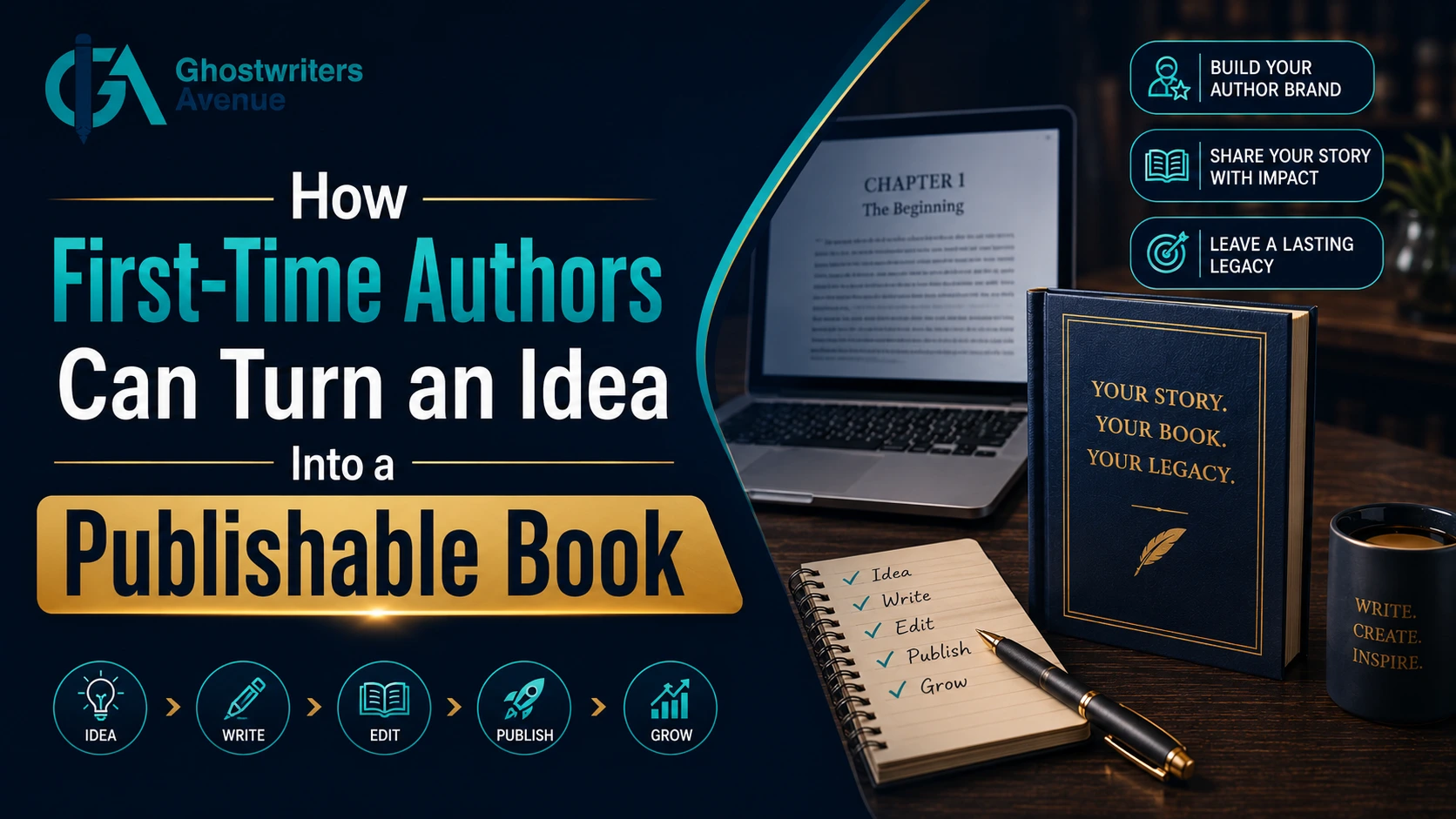
To keep everything organized, here is a practical first-time author checklist that summarizes the key milestones from idea to publication.
- Validate your book idea through audience and genre research, then develop your logline, synopsis, and chapter outline.
- Set a writing schedule with clear word count goals and complete the zero draft without editing.
- Take a break, then revise structurally, followed by line editing and proofreading.
- Share with beta readers, refine using feedback, and finalize the manuscript.
- Research your publishing path and prepare all submission or production materials.
- Invest in professional cover design and formatting.
- Plan pre-launch marketing, including ARC distribution and social media engagement.
- Launch your book with coordinated marketing across platforms.
Experienced authors in specialized genres like screenwriting often follow a modified version of this process. Exploring resources like reasons to choose screenplay ghostwriting for cinematic scripts can give you additional perspective on how professional writing projects move from concept to finished product.
This first-time author checklist is not meant to be rigid. Adapt it to your specific project, genre, and timeline. The important thing is having a clear roadmap, so you always know what comes next.
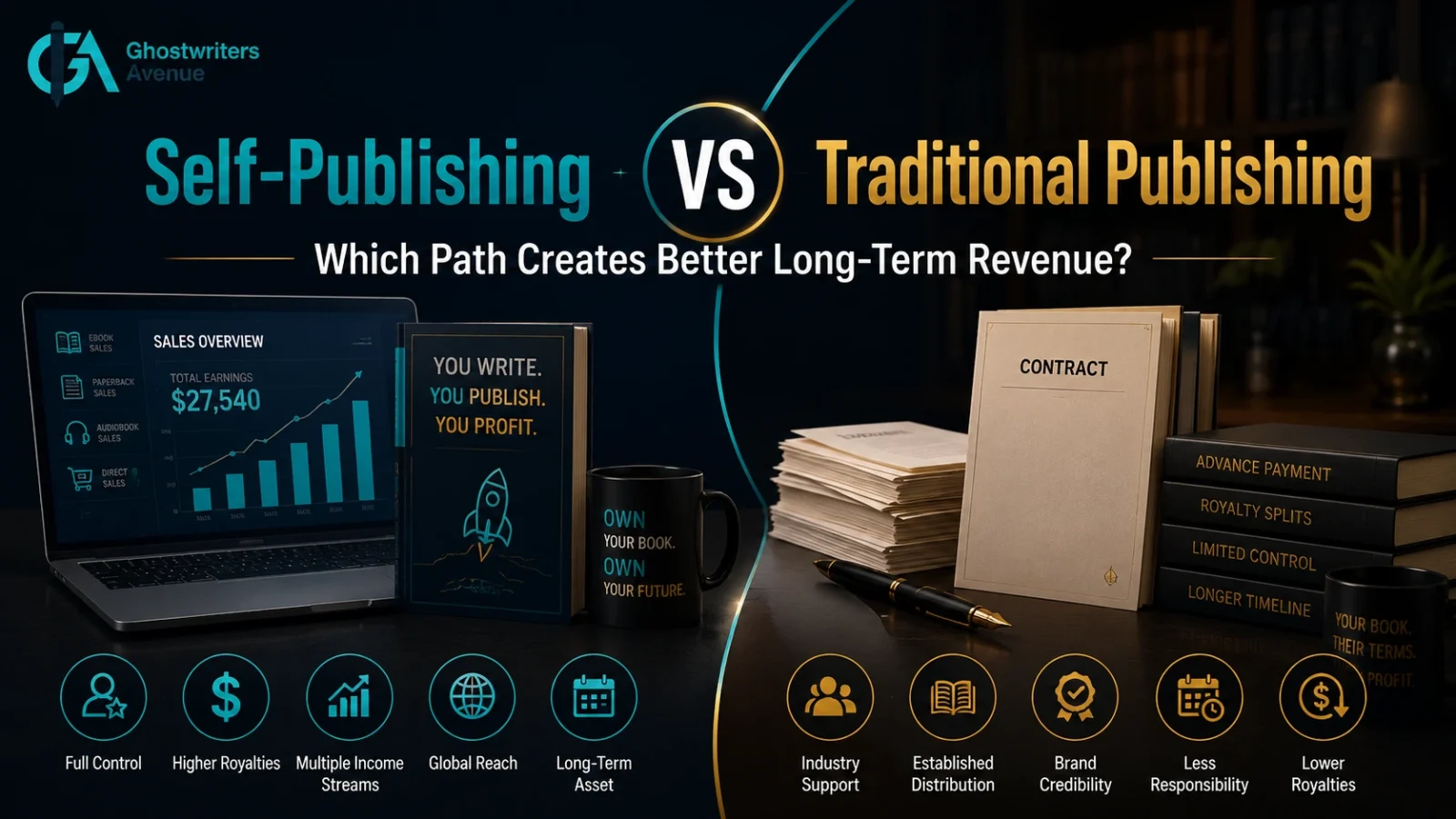
Still unsure which publishing route fits your goals? Read our complete guide on Self-Publishing vs Traditional Publishing to understand the pros, costs, timelines, and long-term benefits of each path.
Frequently Asked Questions
From Blank Page to Bookshelf
Turning an idea into a publishable book is not a mystery. It is a process, and every successful author you admire followed some version of the steps outlined in this first-time author guide. The key is to start with a clear plan, stay consistent through the drafting phase, invest in professional revision, and choose a publishing path that aligns with your goals.
You do not have to walk on this journey alone. Whether you need help with writing, editing, publishing, or all three, our team at Ghostwriters Avenue works with first-time authors every day to turn raw ideas into polished, market-ready books that launch careers.